
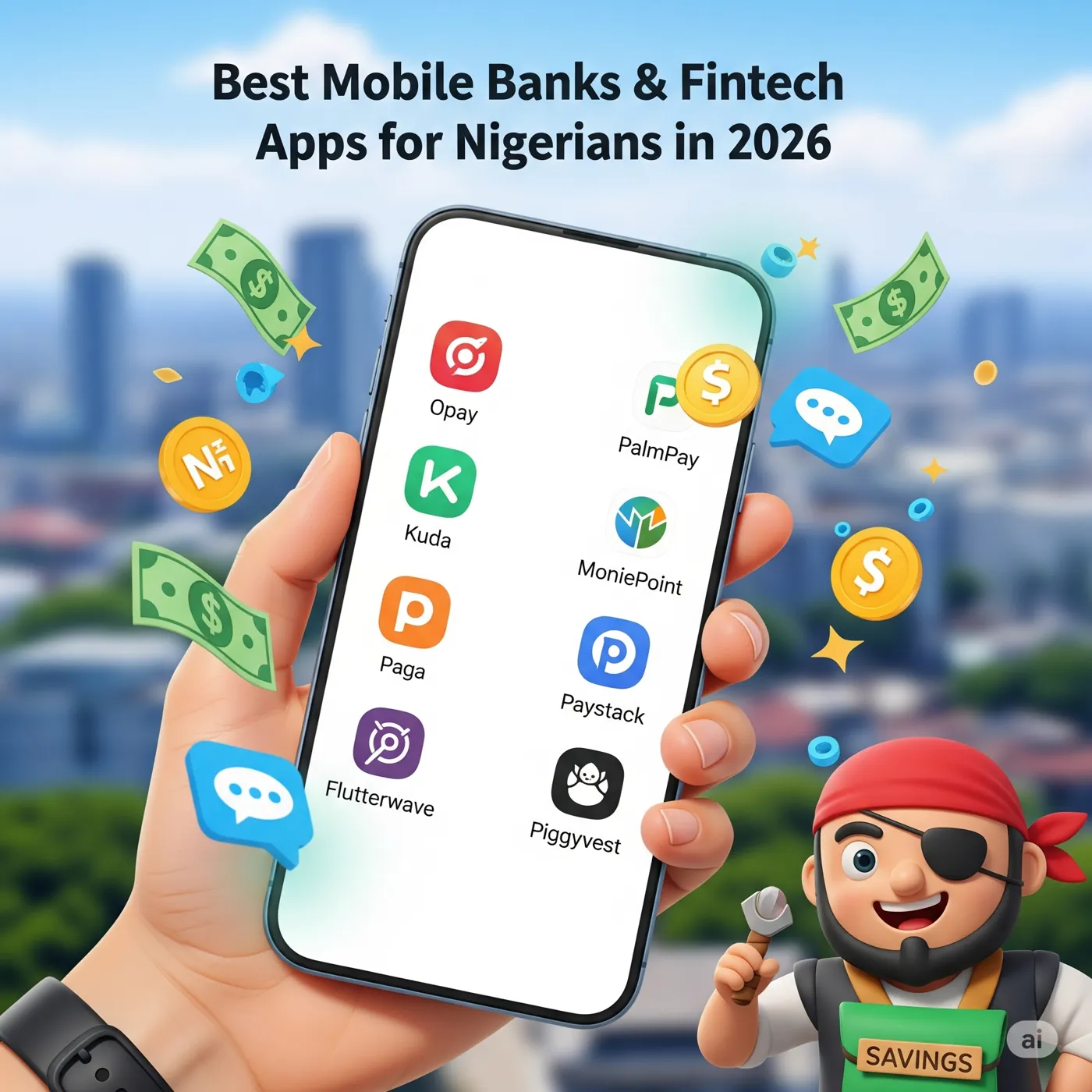
Best Mobile Banks and Fintech Apps for Nigerians in 2026
If you've been on the hunt for the best mobile banks and fintech apps for Nigerians in 2026, let me just say this: there's a dizzying number of options. Every time I open my phone, it feels like there's a new app promising faster transfers, better rates and total financial freedom. But which ones actually live up to the hype? And what makes them tick?
Let's figure that out, step by step. Not just for the sake of being thorough, but because, honestly, not every app is right for everyone.
I should get one thing out in the open: I'm a typical Nigerian app user. I've lost count of the times I've frantically refreshed a sluggish dashboard, sent customer care semi-desperate messages saying, "Help me o!", or found myself explaining online payments to a sceptical older relative.
If you've been there, you'll understand why ease of use, speed, FX options (yes, still tricky in 2026!), reliable customer service and genuine local relevance are what I focused on. And, ahem, apparently, even the odd pirate has an opinion to share. But I'll get to him in a bit.
Here's How I Evaluated Them
- Ease of Use: Does the app make everything straightforward, even if you're not particularly tech-savvy? Is the interface clunky, or can you simply open it and get things done?
- Speed: Transfers, airtime top-ups and bill payments. Are they instant? Are they as quick as... well, nothing is quite as fast as a pirate escaping with stolen treasure, but at least they shouldn't be slower than your average morning traffic jam.
- FX and Global Access: In 2026, international payments matter more than ever. Can you shop on Amazon, pay for international services or send a friend abroad some money without unnecessary hassle?
- Customer Service: This one is critical. An app can look beautiful, but what happens when something goes wrong? Can you actually reach someone who can help?
- Local Relevance: Does it understand the needs of Nigerians? Can you pay your electricity bills, buy airtime across all networks and manage everyday transactions? Does it support small business owners, or leave them to figure things out on their own?
Before getting into the details, though, every app has a backstory worth exploring. Think of it as a bit of fintech lore.
I remember waiting in a queue at a danfo park when a friend asked me, "Why do you stick to Kuda instead of OPay?" It got me thinking. Each app has its own flavour, almost its own personality. And sometimes, what works brilliantly for one person simply doesn't work for another.
Getting to Know the Major Players
- OPay could easily be described as the big-tent app. Initially, I remember it being associated with ride-hailing. Today, it's grown into an all-in-one financial platform, covering everything from paying at local bukas to settling school fees. There are cashback offers, promotions and seemingly always something new to explore. I like the modern interface, although the occasional hiccup, particularly after an update, can be frustrating.
- Kuda leans into that "bank of the free" identity. There's something reassuring about using a banking app that feels straightforward without constantly worrying about unnecessary charges. Its current offering includes 25 free transfers to other banks every month, alongside savings, cards and other banking services. Its simplicity is one of the things I appreciate most. Of course, that minimalist approach might feel a little limiting if you prefer having lots of features and options at your fingertips.
- PalmPay was one of those apps that caught my attention the first time I saw someone using it to pay at a market. Bright colours, plenty of bonuses and a strong focus on everyday transactions and agent banking. It's friendly, although sometimes a little too enthusiastic with its promotions. I find it fun to use, but the busy interface might feel overwhelming if all you want is straightforward, no-nonsense banking.
- Moniepoint is practical, business-focused and particularly relevant to Nigeria's small-business ecosystem. Market traders and shop owners are familiar with the brand, thanks to its payment terminals, agent network and cash withdrawal services. If you run a business, chances are you've encountered it somewhere. Its mobile app experience is more about getting things done than impressing you with fancy gradients or animations.
- Paga feels almost nostalgic at this point. Many people I know first encountered it through a street agent, often the one sitting beneath a familiar yellow umbrella. These days, its app remains a useful option for people who value established payment services over flashy features. I remember using Paga to save a friend's day by sending money when other services simply weren't responding.
- Paystack and Flutterwave occupy slightly different spaces. They're particularly relevant to people running businesses, selling online or accepting digital payments. As a customer, you've probably used one of their payment systems without even realising it. Those familiar "Pay Now" buttons are often powered by platforms like these. Friends with side hustles have told me how convenient they can be for setting up online payments. However, FX and cross-border transactions still come with their own challenges.
- PiggyVest is where savings meet discipline. When unplanned spending kept wrecking my budget, PiggyVest helped me get things back under control. It's designed primarily for savings and investment-related services, with features that encourage you to lock away money instead of dipping into it whenever you feel like spending. The interface is relatively straightforward, although the notifications can occasionally feel like a lot. Still, it does what it's supposed to do.
What Actually Sets These Apps Apart?
Before I start handing out medals, let's talk about a few important differences.
Between OPay's colourful interface and everyday convenience, Moniepoint's role as a business backbone and Paystack's online payment infrastructure, there's a much bigger fintech ecosystem at work.
PiggyVest isn't designed to replace your everyday banking app, just as Kuda doesn't necessarily offer every feature you'll find on PalmPay.
And that's perfectly fine.
Sometimes, you just want to buy airtime quickly without navigating a dozen pop-ups or promotional messages. Other times, you need an app that can handle your business payments or help you save consistently.
Customer service, however, remains a mixed bag.
OPay responded to my last support chat within ten minutes, which was impressive. PalmPay has occasionally felt like shouting into the void. PiggyVest? Polite and clear. Moniepoint? Direct, sometimes a little abrupt, but there's something to be said for getting straight to the point.
Then there's our unexpected guest: [pirate character placeholder].
Picture this: you're about to try a new financial app when a rugged, peg-legged pirate, let's call him Captain Timi, leans over and grins.
"Arr, matey! Don't be trustin' yer treasures to just any digital chest! Which o' these fine vessels runs the fastest in a storm?"
It's not exactly the kind of advice you'd expect to receive while navigating Lagos traffic, but the captain has a point.
Choosing a financial app isn't just about attractive interfaces or generous cashback offers. It's about knowing where your money is going and trusting the platform you're using.
And that's what makes these comparisons worthwhile.
Each platform has developed its own identity. OPay is the friendly all-rounder. Kuda is sleek and simplicity-focused. PalmPay keeps the bonuses coming, which can be rewarding if you enjoy promotions. Moniepoint is deeply connected to everyday business transactions. Paga remains a familiar name for people who value established payment services.
For online sellers and businesses, Paystack and Flutterwave offer important payment infrastructure. And PiggyVest? Think of it as your friendly financial jailer, helping you save yourself from yourself.
Best Mobile Banks and Fintech Apps in Nigeria: My Recommendations for 2026
Now, let's get to the part you've probably been waiting for. If I had to recommend these platforms based on what they actually do best, here's how I'd break things down.
Rather than pretending one app can do everything, I've matched each platform to the kind of user who would get the most out of it.
1. Best for Everyday Banking: OPay
If you want one app that handles most of your everyday financial activities, OPay deserves a place on your shortlist.
It brings together transfers, airtime and data purchases, bill payments, card services and savings features. Its combination of digital services and physical agent access also makes it particularly relevant to people who frequently move between cash and digital payments.
I would recommend OPay to students, salary earners, traders and people who simply want a convenient way to handle everyday transactions.
My verdict: A strong everyday option if you value convenience and an extensive range of services.
2. Best for Simple Digital Banking: Kuda
Kuda is a good option if you prefer a relatively straightforward banking experience without too much clutter.
Its 25 free monthly transfers to other banks make it worth considering for people who regularly send money to different Nigerian banks. It also offers savings products, debit cards and other personal banking features.
I particularly like the idea of having a banking app that doesn't constantly compete for my attention with promotions.
My verdict: A solid choice for people who value simplicity, budgeting and predictable everyday banking.
3. Best for Cashback and Rewards: PalmPay
If you enjoy getting something back when you spend, PalmPay is worth considering.
Its offering includes cashback on eligible transactions, bill-payment rewards, transfers, savings products and card services. The app also supports a range of everyday payments, including airtime, data, electricity and television subscriptions.
The important thing is not to let cashback dictate your spending. A reward isn't necessarily a bargain if it encourages you to spend money you didn't intend to spend.
My verdict: Particularly appealing to frequent digital-payment users who enjoy promotions and everyday rewards.
4. Best for Small Businesses: Moniepoint
For business owners, Moniepoint is one of the most interesting names on this list.
Its business services go beyond receiving transfers. The platform offers business accounts, POS terminals, expense cards, business management tools and access to financing products.
That makes it relevant to market traders, shop owners, restaurants and entrepreneurs who need more than a personal banking app.
I also like the distinction between its personal and business offerings. Keeping business transactions separate from personal spending makes managing money considerably easier.
My verdict: My recommendation for entrepreneurs and small-business owners who need integrated banking and payment tools.
5. Best for Savings Discipline: PiggyVest
If your biggest financial problem is spending money you intended to save, PiggyVest deserves serious consideration.
Its savings features are designed to help users build consistent saving habits through automated contributions, savings goals and products with different withdrawal conditions.
Its investment-related offerings also give users additional ways to explore financial growth.
However, remember that investment products come with different levels of risk, and returns aren't guaranteed across every product.
My verdict: A useful companion for people who want to develop better savings habits and become more intentional with their money.
6. Best for Established Digital Payment Services: Paga
Paga remains worth considering if you're looking for a familiar digital payment platform.
Its services are relevant to people who need to send and receive money, make payments and access financial services through digital channels and agent locations.
Its longstanding presence in Nigeria also gives it a different kind of familiarity compared with some newer fintech brands.
My verdict: Worth considering if its payment services and agent network match your everyday needs.
7. Best for Online Businesses: Paystack
If you're selling products online, running an e-commerce store or collecting payments from customers, Paystack should be on your shortlist.
It provides businesses with payment infrastructure for accepting online and in-person payments. Its tools also include invoicing, recurring payments, subscription billing and split payments.
The platform is particularly relevant to entrepreneurs who want to accept digital payments without building an entire payment system themselves.
My verdict: A strong starting point for Nigerian businesses that need a straightforward way to collect payments.
8. Best for Broader Payment Reach: Flutterwave
Flutterwave is another important option for businesses that want to accept payments through different channels and serve customers across multiple markets.
Its infrastructure supports payment collections, payouts and several payment methods, with availability varying by country and service.
For businesses with international ambitions, this is worth exploring. Just remember to compare transaction fees, settlement timelines, supported currencies and country-specific requirements before committing.
My verdict: Particularly worth considering for businesses looking beyond a purely local customer base.
Quick Comparison: Which Fintech App Should You Choose?
| Platform | Best for | My recommendation |
|---|---|---|
| OPay | Everyday transactions | Best all-round option |
| Kuda | Simple digital banking | Best for simplicity |
| PalmPay | Cashback and rewards | Best for promotions |
| Moniepoint | Small businesses | Best for entrepreneurs |
| PiggyVest | Savings discipline | Best for savers |
| Paga | Digital payments | Best for familiar payment services |
| Paystack | Online payments | Best for online sellers |
| Flutterwave | Multi-market payments | Best for expanding businesses |
These are editorial recommendations based on each platform's primary use case, not independently measured performance rankings.
A Few Things to Check Before Choosing a Fintech App
Before downloading every app on this list, there are a few things I'd encourage you to consider.
Check the fees.
Don't just look at the advertised free transfers. Check the charges that apply after promotional allowances, card requests, withdrawals and other transactions. A few small charges can add up over time.
Understand the savings terms.
If an app advertises attractive interest rates, find out whether the rate is fixed or variable, whether there are withdrawal restrictions and what happens if you need your money earlier than expected.
Check the regulatory status.
This is particularly important when you're trusting a platform with your money. Find out which regulated institution provides the service, whether your deposits are covered by NDIC insurance and what limits apply.
Also, remember that payment processors, microfinance banks, mobile money operators and investment managers don't all operate under the same regulatory framework.
Test customer support.
Don't wait until a transfer goes missing before finding out how to contact customer care. Check the available support channels and how complaints are handled.
Don't ignore security.
Use strong passwords, enable available two-factor authentication, protect your transaction PIN and never share your OTP with anyone. Not even someone claiming to be from customer support.
So, Which Fintech App Is Actually the Best in Nigeria in 2026?
After looking at what these platforms offer, my biggest takeaway is that there's no universal winner.
If I wanted an everyday payment app, I'd shortlist OPay and PalmPay.
If I wanted a simpler banking experience, Kuda would get my attention.
If I were running a small business, I'd take a serious look at Moniepoint. For online payments, I'd compare Paystack and Flutterwave.
And if my biggest challenge was saving consistently, PiggyVest would be one of my first considerations.
The smartest approach might actually be to use two or three complementary services rather than expecting one app to handle everything.
For example, you could use Kuda or OPay for everyday banking, PiggyVest for structured savings and Paystack if you're running an online business.
Just make sure you understand the fees, terms and security arrangements of each platform.
One final thing: these recommendations aren't a substitute for checking current rates, product terms and regulatory information. Financial products change, and what looks like the best deal today might not be the best deal next month.
Final Thoughts: Choose What Works for You
Remember Captain Timi, our pirate friend?
Well, I think he'd agree that choosing where to keep your digital treasure deserves a little thought.
The Nigerian fintech ecosystem has grown considerably, and that's a good thing. We have more options for everyday banking, business payments, savings and digital transactions than ever before.
But more options also mean more decisions.
Don't download an app simply because everyone is talking about it. Don't chase cashback without understanding the conditions. And don't assume that the platform with the prettiest interface is automatically the best place for your money.
Look at what you actually need, compare the services and choose accordingly.
Because, at the end of the day, the best mobile bank or fintech app in Nigeria isn't necessarily the most popular one.
It's the one that makes managing your money easier, safer and more convenient.
Now, over to you: Which fintech app do you trust the most in Nigeria, and which one do you think deserves more attention in 2026?